
The Homeowners’ Energy Policy Act
On July 8, 2024, Michigan’s governor signed House Bill 5028 into law as the Homeowners’ Energy Policy Act, MCL – Act 68 of 2024, MCL – Section 559.301 et seq. MCL – Section 559.305 invalidates provisions in a “homeowners’ association agreement” that do any of the following:
(a) A provision that prohibits, or requires the approval of a homeowners’ association for, a member to replace, maintain, install, or operate an energy-saving improvement or modification.
(b) A provision that compels, or requires association approval for, a member to make auxiliary changes needed for the installation of an energy-saving improvement or modification.
MCL – Section 559.303 defines various covered improvements and modifications: clotheslines, air source heat pumps, ground source heat pumps, insulation, rain barrels, reflective roofing, energy efficient appliances, solar water heaters, electric vehicle supply equipment, energy-efficient windows, and energy-efficient insulations materials, and solar energy systems.
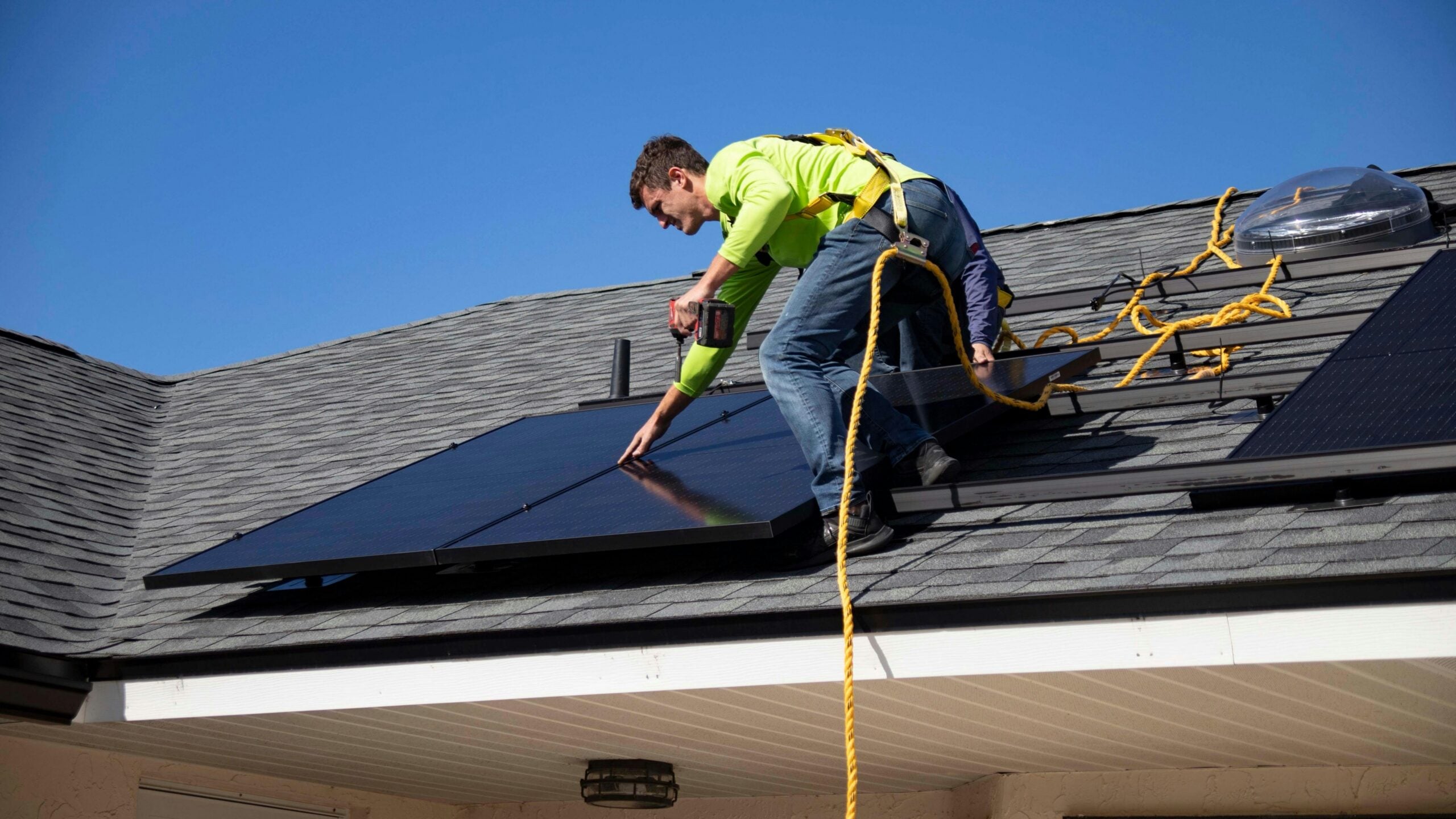
However, the Homeowners’ Energy Policy Act imposes affirmative duties only regarding solar energy systems. MCL – Section 559.309 requires homeowners’ associations to enact a solar energy policy before April 2, 2026.
Homeowners Associations
Traditional Homeowners Associations (“HOA”) are organized as a platted subdivision, and governed by a recorded Declaration of Covenants, Conditions and Restrictions (“Declaration”) (“CCR”). [1]
These associations are subject to the Homeowners’ Energy Policy Act and should adopt a Solar Energy Policy Statement. Failure to do so allows homeowners to install solar energy systems without application, approval, fines, or penalties, pursuant to MCL – Section 559.311.
Condominium Associations in General
Despite the legislature placing the Homeowners’ Energy Policy Act in MCL – Chapter 559 “Condominiums,” its application to associations organized under MCL – Act 59 of 1978, the Condominium Act, is doubtful. The definitions section of the Homeowners’ Energy Policy Act, MCL – Section 559.303, does not does not define the term “homeowners’ association.” Furthermore, the Homeowners’ Energy Policy Act makes no reference to “condominium association.” Given these omissions, we take the interpretation that the Homeowners’ Energy Policy Act does not apply to associations organized under the Condominium Act.[2]
Detached/Site Condominiums
Detached/site condominiums are projects where the homes have no shared roofs, and the Co-owner’s Unit typically includes both the home and some or all the yard (together, the “site”). Visually, they may be indistinguishable from traditional subdivisions.
We take the interpretation that these associations are not subject to the Homeowners’ Energy Policy Act and are not required to adopt solar energy policy statements. However, the areas where Co-owners would be installing solar energy systems are part of the Unit or Limited Common Elements, areas where the Co-owner has exclusive uses, as well as the responsibility for decoration, maintenance, repair, replacement, and insurance. Therefore, if the associations do not have aesthetic or architectural objections to solar energy systems, they may voluntarily adopt solar energy policy statements, for uniformity with homeowners associations.
Attached Condominiums
In this context, attached condominiums are associations organized under the Condominium Act that have shared roofs. MCL – Section 559.303 defines shared roof as “a roof that serves more than 1 home or unit, including, but not limited to, a contiguous roof that serves adjacent homes or units.”
Independent of our interpretation that condominium associations are not subject to the Homeowners’ Energy Policy Act, attached condominiums benefit from a specific statutory exemption. MCL – Section 559.313 states that the Homeowners’ Energy Policy Act does not apply to solar energy systems or other energy-saving improvements or modifications in common areas or on shared roofs. Therefore, these associations are not required to adopt solar energy policy statements.
Conclusion
If your homeowners’ association needs assistance developing a solar energy policy statement to comply with the Homeowners’ Energy Policy Act, or if your condominium association wants to take a proactive approach with solar energy system installations or energy improvement modifications, then Tilchin & Hall, P.C., can help. Please call us at (248) 349-6203 or email us using the form below.
Disclaimer: This Blog/Web Site is made available by the lawyer or law firm publisher for educational purposes only as well as to give you general information and a general understanding of the law, not to provide specific legal advice. By using this Blog, you understand that there is no attorney client relationship between you and lawyer, law firm, and the Blog/Web Site publisher. The Blog/Web Site should not be used as a substitute for competent legal advice from a licensed professional attorney in your state.
[1] For a more in-depth explanation between condominiums and traditional subdivisions, please check out our blog from November 28, 2022.
[2] For examination of the legislative precedent, statutory constructions, legal interpretation, and case law, please check out our blog from July 22, 2024.
